


Company merch that actually gets worn has three things in common: it's something people would buy for themselves, it fits, and the logo is understated. The heavier, softer tee, the hoodie, the cap and the team polo come out of the closet. The thin tee with a logo across the whole chest ends up as pajamas or a rag for washing the car.
What actually gets worn
| Product | Who wears it | Why it works |
|---|---|---|
| Heavier cotton tee with a good cut | the team, customers, at events | people wear it on weekends too, if it looks good |
| Hoodie | the team, especially in winter | warm and comfortable, it goes home with them |
| Cap | field crews, outdoor events | embroidered logo, lasts for years |
| Polo | staff who deal with customers | looks neat, easy to wash |
| Softshell jacket | field crews, construction sites, delivery | useful, worn every day |
| Tote bag | customers, trade shows | it goes grocery shopping, so people see it |
What usually stays in the box: thin tees, tees in loud colors picked only because they're "the company colors," and anything with a long slogan.
Quality shows up on the spec sheet
The difference between a tee that gets worn and one that gets forgotten starts with the fabric. Before you choose, ask for the product spec sheet and check three things: fabric weight (a heavier tee drapes better and isn't see-through), fiber composition and fit.
Composition isn't a marketing detail. In the EU, Regulation 1007/2011 requires textile products to carry a label showing their fiber composition, one that's durable, easily legible, visible and accessible, in the official language of the country where they're sold. If someone suggests removing the original label and replacing it with your company's, the composition information has to stay.
For products worn right against the skin, you can also ask for OEKO-TEX Standard 100 certification. It shows the item was tested for harmful substances, component by component: thread, button, trim. The standard has four product classes based on use, and class 2 covers products in direct contact with the skin.
The logo: smaller than you think
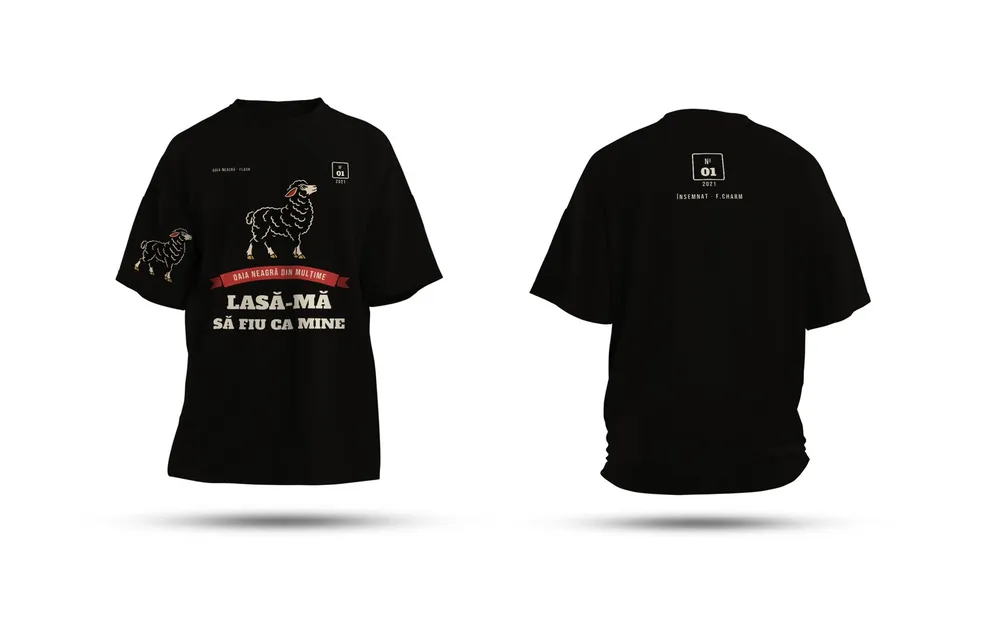
A palm-sized logo on the left chest gets worn. One that covers the whole chest turns the tee into an event uniform. A few rules we follow:
- the logo small on the chest, and the bigger message, if there is one, on the back;
- basic colors for the garment (black, navy, gray, white), with the logo in your brand colors;
- embroidery on caps and polos, print on tees and hoodies.
Which technique you choose depends on the fabric, the number of colors and the quantity; we compared screen printing, DTF and embroidery in a separate article.
Sizes: ask, don't guess
The surest way to end up with unworn merch is ordering "M and L for everyone." Collect sizes from each person using the maker's size chart, and offer a women's cut where there is one. We went into detail on sizes, colors and quantities for team tees.
The cost depends on the product, the technique, the number of colors and the quantity; it comes in the quote once we know what you need. See what we can customize on our Merch page.
Sources
- Regulation (EU) No 1007/2011 on textile fibre names, EUR-LexArticle 14 (fiber composition label, durable, legible, visible) and Article 16 (language of the member state)
- OEKO-TEX Standard 100, OEKO-TEXtesting every component for harmful substances, the four product classes
Checked: surse Xenia Pușcașu · editare Nora Vlăsceanu · SEO Mihnea Tăbăcaru