

With team T-shirts, most mistakes come from the size list. Collect each person's size using the size chart of the shirt you've picked, not the size they usually wear. Choose the fit (unisex or women's) before the color. And order a few extra for new hires and for shirts that get ruined.
Sizes: every manufacturer has its own chart
A medium isn't the same medium across brands. Size charts are given in centimeters or inches, usually as chest measurements, and the ranges differ between brands and even between styles. Fruit of the Loom's size guide, for example, has separate charts for men, women and kids, and in the men's chart a medium covers a 96.5–101.5 cm chest.
What works in practice:
- Pick the shirt style first, then send your team the chart for that style.
- Ask each person to measure a T-shirt that fits them well, laid flat on a table: the width from armpit to armpit and the length from shoulder down. Compare with the chart.
- If you can, get a sample set in the middle sizes and have two or three people try them on.
- Put the sizes in one sheet: name, fit, size. No "probably a large."
Unisex or women's fit
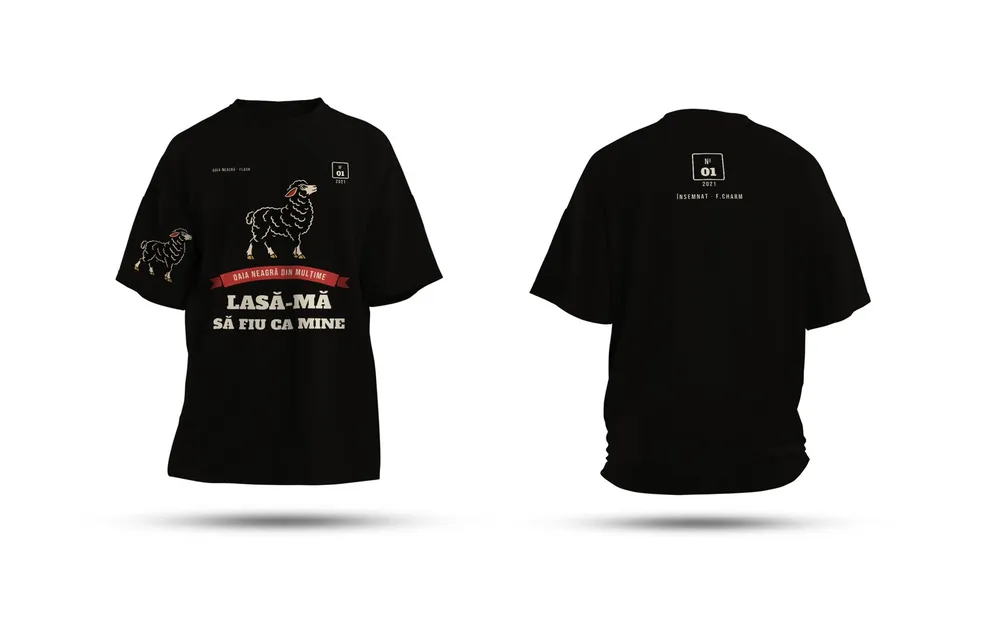
A unisex style has a straight cut, which doesn't suit everyone. For a mixed team, consider a women's style from the same product line: same color, same fabric, shaped at the waist. The logo goes in the same spot on both, though the print may need to be a little narrower on small sizes. That gets decided at the mockup stage, not at the press.
Shirt color and logo color
The shirt color comes from the manufacturer's color range, not from your brand color code. If your exact red doesn't exist, pick the closest shade and adjust the print, not the other way around.
Two things change which printing method fits, so mention them up front:
- Dark shirt, light logo. Light colors on a dark fabric are prepared differently than on a white shirt, and some methods handle it better than others.
- A logo with many colors or gradients. In screen printing each color is prepared separately, so a six-color logo on 15 shirts is rarely a good choice. Other methods suit small runs and colorful logos better.
We compared screen printing, DTF and embroidery, with the strengths of each, in our post on choosing a printing method.
Fabric and labels
For shirts worn all day, in a kitchen or a warehouse, ask about the fabric (cotton, poly blend) and certifications. OEKO-TEX Standard 100, for instance, tests every part of the product, down to the thread and trims, against a list of more than a thousand harmful substances. Its classes range from baby products to home decor textiles; T-shirts fall under products with direct skin contact.
If you also sell the shirts, on top of the ones your team wears, watch the label. EU Regulation 1007/2011 requires textile products on the market to show their fiber composition on the label, in the language of the country where they're sold. If you swap the manufacturer's label for one with your logo, the composition still has to be there.
How many to order
For everyday uniforms, plan on at least two shirts per person so one can be in the wash. For an event, one each is enough.
On top of the total, add spares for:
- people you'll hire in the coming months;
- stained or torn shirts;
- sizes you guessed wrong.
Spread the spares over the most common sizes on your team, not evenly across all of them. A small reprint later, for two shirts, costs more per piece than including them from the start.
What affects the cost and what to send us
The cost depends on the shirt style and fabric, the quantity, the printing method, how many colors the logo has and how many places you print (chest, back, sleeve). The price comes in the quote.
To get started, send us:
- the size list, split by fit;
- the shirt color you want;
- your logo in vector format (PDF, SVG or AI);
- where you want the print and how big;
- the date you need them by.
See what else we make for teams on our merch and for companies pages.
Sources
- Size Guide, Fruit of the Loomseparate men's, women's and kids' charts, chest ranges by size
- OEKO-TEX Standard 100, OEKO-TEXevery component tested against more than 1,000 substances, product classes
- Regulation (EU) No 1007/2011 on textile fibre names and labelling, EUR-Lexfiber composition labeling (Art. 14) and the language of the country of sale (Art. 16)
Checked: surse Xenia Pușcașu · editare Nora Vlăsceanu · SEO Mihnea Tăbăcaru