

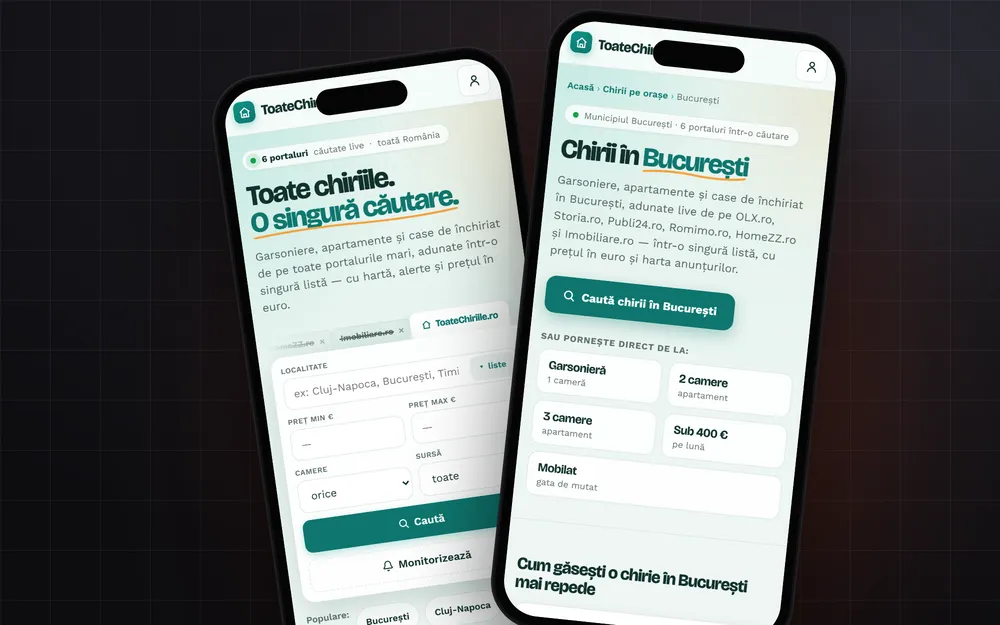

An MVP (minimum viable product) is the smallest version of your app that tells you whether people actually use it. It does one thing well, for a small group of people, and shows you what's worth building next. It's small, but it's finished.
Where the idea comes from
The term is part of the Lean Startup method's vocabulary. Its principles say the MVP exists so you can start learning as fast as possible: build something, measure how people respond, then decide whether to keep going down that road or change direction. The loop is called build, measure, learn, and progress is counted in things you now know for sure about your customers.
In plain terms: before paying for months of development on ten features, you pay for a few weeks on one and see if anyone uses it.
How to pick the one thing
Write one sentence about what the person opening the app wants to get done. Think about their job, not what you'd like to show them.
For a salon booking app, the sentence might be: "The customer sees open slots and books an appointment in under a minute." That's it. Then list everything you'd like the app to have and split it in two:
| Goes in the first version | Waits |
|---|---|
| Service list and open slots | Loyalty program with points |
| Booking and confirmation | In-app payment |
| Canceling a booking | Reviews and a portfolio gallery |
| A simple screen for the salon with the day's bookings | Reports and analytics |
The test for every row on the left: if you remove it, can the person still do what the sentence says? If yes, the row moves to the right.
What you can do by hand at first
Many parts of an app can start out as manual work the user never sees. Paul Graham gives the example of Stripe: its first "instant" merchant accounts were set up by hand, behind the scenes, by the founders. The product looked automated, but a person was doing the hard part.
For a small app, that might mean:
- the admin panel starts out as a spreadsheet, not an interface;
- special notifications are sent by someone at the company, not a system;
- you create accounts for partner businesses yourself instead of building a sign-up form.
Only automate what happens often and eats up time. That way you learn what's worth automating before you pay for it.
Graham also recommends launching to a narrow group: Facebook started out only for Harvard students. For you, that might be one salon, one neighborhood, or the customers you already have.
Minimal doesn't mean broken
Small is fine. Unfinished isn't. If the app is going on the App Store, Apple's rules are clear: what you submit for review has to be the final version, with no placeholder text and no empty screens (guideline 2.1), and an app that's just a repackaged website or doesn't offer enough utility may be rejected (guideline 4.2). Test versions don't belong in the store; that's what TestFlight is for (guideline 2.2).
That's why, for many ideas, the first MVP works better as a web app: you open it in the browser and can change it any time without waiting for approval. We compared the two options in our post on web apps vs. store apps.
How to tell if it worked
Before launch, write down one or two questions you want answered. For example: "Do customers book on their own, without calling?" and "Do they come back and book through the app a second time?" Then track only that.
Beyond the numbers, watch people use the app. You don't need a big study. Jakob Nielsen showed that testing with five users finds about 85% of usability problems, and he recommends several small tests instead of one big one: test with five, fix, test again.
If you have an app idea and want to see how small the first version can be, we can look at it together. What we do is on our App Dev services page.
Sources
- The Lean Startup, Principlesthe MVP as a way to start learning quickly, the build-measure-learn loop, validated learning
- Do Things that Don't Scale, Paul Graham (July 2013)Stripe setting up early merchant accounts by hand, Facebook's narrow launch at Harvard
- App Review Guidelines, Appleguideline 2.1 (final version, no placeholder content), 2.2 (test versions through TestFlight), 4.2 (minimum functionality)
- Why You Only Need to Test with 5 Users, Nielsen Norman Group (March 2000)five users find about 85% of problems, several small tests instead of one big one
Checked: surse Xenia Pușcașu · editare Nora Vlăsceanu · SEO Mihnea Tăbăcaru